

Compared to many others, the UK economy is labour intensive and low-skill. In recent years the limited amount of growth that has been achieved has come by adding to the labour force, rather than increasing productivity through investment in technology. Hunt’s Autumn Statement will do little to change this. His ‘tax break’ investment incentives are minimal and won’t significantly alter the UK’s bottom of the league position.
Since the end of the pandemic, growth in the size of the workforce which had been growing steadily and consistently over a number of years, reaching a record high of 76.5% by 2020, has been slowing down. In fact, the latest ONS data shows a slight contraction. Post – Covid data has also recorded a ‘great resignation’ as many older workers who’d been furloughed decided to leave the workforce permanently.
Despite worrying signs to the contrary, the labour market remains tight and unemployment well under 5%, so it’s unclear if Hunt’s 2% cut in National Insurance ( considered a ‘supply-side’ measure in Neo-liberal speak) will have the desired effects of persuading the existing labour force to work more – particularly if income tax thresholds haven’t been altered. This will also be the case with the increase in the legal minimum wage.
Meanwhile Brexit had seen a fall in the supply of eastern European workers – who often worked in jobs they were over-qualified for. It’s been reported that post-Brexit, some employers are offering 60% more pay as a result of a shortage of 500,000 fruit pickers – wages in hospitality also recorded an 8% increase in 2021/2. In addition there’s clear evidence of workers leaving the social care sector for other work (some going to Amazon fulfilment centres for example, where on the back of mega profits, pay levels are rising slightly ). Labour shortages have also led to reversals in government reactionary visa policies.
In other words, the UK economy has used up what can be referred to as a ‘reserve army’ of labour ( a section of the workforce that will be the first to be unemployed when an economic downturn sets in). As a result, as well as the ‘long term unemployed’, Hunt is targeting those classed ‘economically inactive’ – not in work, but not officially looking for it . But with run down health services many have also been too sick to return – official figures suggest there are 2.5 million in this category. There have also been recent increases in the number of NEETs, (young people not in education, employment or training) as previous Tory initiatives aimed at young people, like Boris Johnson’s Kickstart have been expensive failures. Yesterday’s Autumn Statement was preceded by a Back to Work Plan announced earlier in the week.
https://www.gov.uk/government/news/employment-support-launched-for-over-a-million-people

According to the Government, the new plan will ‘help up to 1,100,000 people with long-term health conditions, disabilities or long-term unemployment to look for and stay in work’. As part of this, the Government will ‘expand key health and employment programmes such as NHS Talking Therapies, Restart, and Universal Support in a bid to get people off benefits and into work’. While further plans are being drawn up to enable those with mobility and other health issues to work from home.
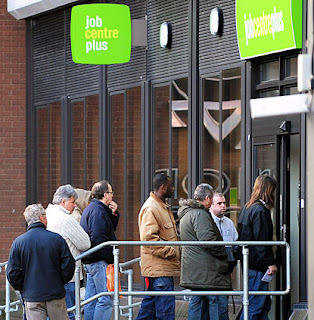
But, reminiscent of earlier times when unemployment was over 10% and led to outbursts against ‘social security scroungers living at the tax payers expense’ there will also be ‘tougher sanctions’. The chancellor says that one million vacancies in the economy and more than 100,000 people each year signed off for sickness and disability, with no requirement to work, is ‘wrong economically and wrong morally’, So he has announced that, after support and offers of work placements , all those who ‘refuse to engage’ with their Jobcentre will have their benefits stopped and their ‘case closed’.
Sadly, Labour front benchers have kept quiet, let alone offer clear alternatives. They continue to talk about the ‘dignity’ of work without any real interest in the type of work many people are forced to do and in contrast to this ‘work till you drop’ approach, there’s little discussion about how, rather than just being written off as a ‘threat to our jobs’ new developments in technology and AI enhanced productivity gains could be used to reduce the working week or give people more choice over how they fit work into the rest of their lives. And of course, little is said about the effects of an ageing population on the future workforce.

 Education, Economy and Society