
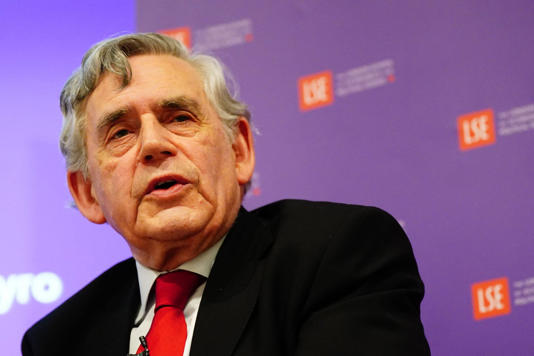
Within a few days of Labour coming to office, Gordon Brown has intervened in the debate about T-levels. https://www.theguardian.com/politics/article/2024/jul/16/gordon-brown-calls-on-ministers-not-to-scrap-t-level-vocational-qualification
This site has continued to document the issues that surround the Ts (see the categories menu below right). T-levels originate from a 2016 report from Lord Sainsbury and a subsequent White Paper. Since then, they have been rolled out in a range of vocational and more occupationally specific areas – there’ll be 22 by 2025. 30 000 students have enrolled in T-levels since 2020 – 16,000 in September 2023 and around a billion pounds thrown at them – getting on for 1% of the entire education budget. But they way they’ve been introduced and also, how they have been presented to students has been slammed by Ofsted, as commentators remain far from convinced about their viability.
Recent attention has focussed on the plans to defund existing vocational qualifications where the Ts overlap – particularly the hugely popular BTECs. Proposals were railroaded through parliament against widespread opposition – ranging from ex Tory education ministers in the House of Lords to the National Education Union. https://education-economy-society.com/2023/02/05/defending-btecs-unlikely-allies/ but then in a bizarre U-turn last October, Rishi Sunak announced that the Ts would be subsumed into a new ‘Advanced British Standard’. Although by this time, most accepted this was never going to happen!
Though she did not suggest that in office, Labour would ditch the Ts, Shadow education spokesperson Bridget Phillipson said it would ‘pause and review’ the cancellation of the BTEC funding cuts. The advocates of T-levels have been only too aware that the continued existence of BTECs could seriously undermine a successful roll-out. Being one of them, Brown fears for their future and has written the foreword to a report commissioned by Sainsbury which sets out the (misconceived) contribution of T-levels in addressing the UK ‘skills deficit’. https://feweek.co.uk/wp-content/uploads/2024/07/WPI-T-Levels-Report81.pdf
Like others before, the report argues that the UK faces a crisis in ‘intermediate’ level skills and that this will impede Labour’s ‘growth’ agenda – in otherwards, following the Tories, it implies there are too many graduates. Yet the reality is that young people have signed up for higher education because of the disappearance of many jobs they were once able to access from school or college. Data also shows that, as with other vocational qualifications, large numbers ( half of those completing T-levels) move to HE not employment.
If Labour is unlikely to listen to Brown on the post-16 curriculum, its Skills Bill was included in this week’s King’s speech. Labour plans to establish Skills England aiming to “bring together businesses, providers, unions, mayoral combined authorities (MCAs)”. It will also mean the end of the ineffective Institute for Apprenticeships and Technical Education (IfATEE). One task of the new body, will be to identify broader, rather than just apprenticeship training eligible for funding under Labour’s proposed “growth and skills levy” https://education-economy-society.com/2024/06/17/no-money-for-education/ . But will Labour have any more success than the Tories?
But while the new government publishes grand plans and sets up new quangos, claiming vacancies in England more than doubled between 2017 and 2022 to over 530, 000, it could start by addressing the chronic labour shortages in the care sector where job vacancies stand at about 1 in 12 and where a further 540,000 social care posts would be required by 2040, if the workforce is to grow in line with the increase in the number of people over the age of 65.
In this sector, where, like in many others ‘skills’ are developed in the workplace, as much as in classrooms, the issue is pay; as many experienced staff leave for better (‘unskilled’) renumerated employment in supermarkets or Amazon fulfilment centres and the like. A bold response would demonstrate government commitment to a ‘needs’ rather than just a growth strategy.

 Education, Economy and Society