Labour’s election manifesto contained few promises for education. Probably most eye-catching has been its plan to impose VAT on private school fees in England (and to remove the exemption from business rates). Schools don’t have to pass these increases onto parents and pupils with special needs statements will be exempt.
The traditional image of the private (Independent) school is of ancient buildings, extensive playing fields and antiquated uniforms. Serving a small and privileged section of the population, they nevertheless enjoyed ‘charitable’ status and in exchange offered bursaries and scholarships to ‘bright’ students from lower down the social structure.
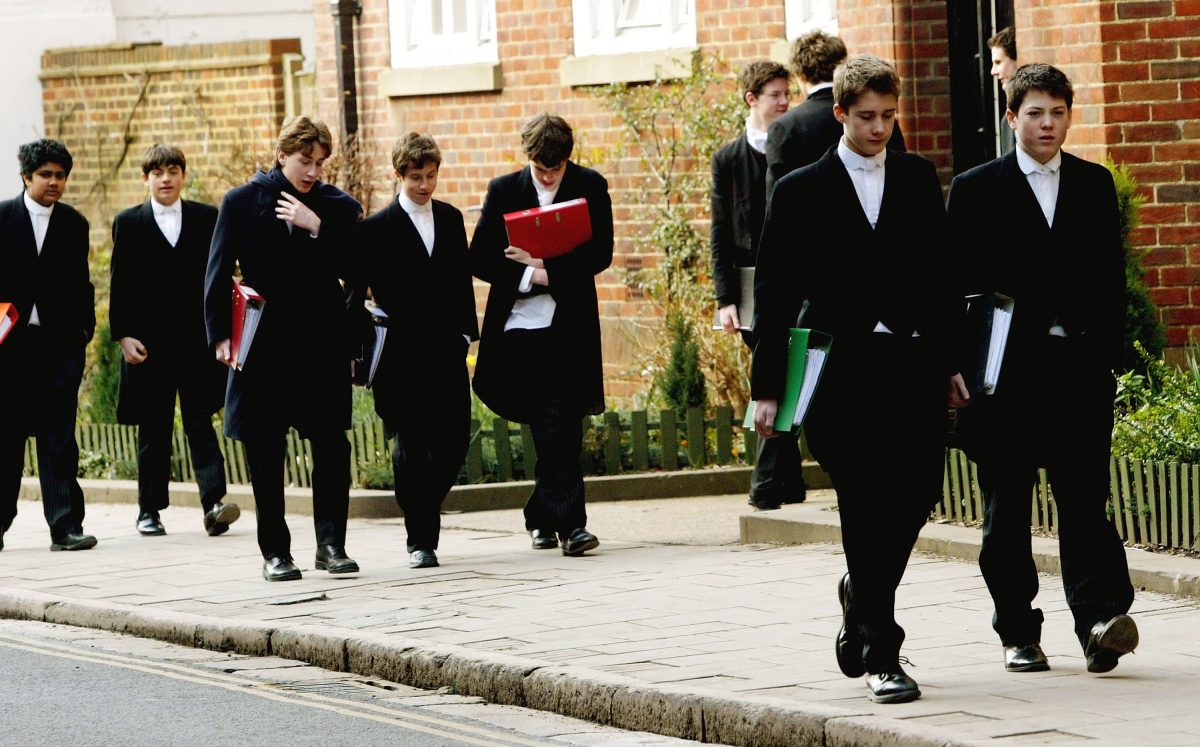
In the past, these schools differentiated themselves by offering an ‘exclusive’ type of education (and for this reason, continued to draw in wealthy foreign students) but they now realise that in the 21st century where access to leading universities largely depends on public exam grades, rather than elite networking, they are in competition with top private ‘day-schools’.
There are now about 2,500 official private education providers in the UK, many not registering for charitable status at all, in other words, openly operating as businesses. While some offer more specialist provision that might not be available elsewhere, with a few exceptions, private schools heavily outperform those in the state sector. In terms of the number of A/A* per entry (the usual requirement to enter Russell universities) for example, there are no non-selective state schools in the top 50. Almost a third of Oxbridge students are from private schools with similar totals for Durham and Imperial/UCL. In turn 60% of private school students head for Russells.
But gaining access to institutions that ensure top exam grades costs a shed load of money. At senior school, fees for a day pupil can range between £12,000 to £35,000; for boarders at an elite (Eton plus) institution, it can be £50,000 a year. With most people’s real incomes having stood still, or at best seen very modest growth over the last 10 years and with the medium income just under £30 000 per annum, these fees are well beyond the means of all but the very small minority whose earnings continue to pull away from the rest. This is why the private sector only educates about 6% of the population – though more in the prosperous south-east of England.
In the past, private schooling remained a controversial issue with Labour Party and National Union of Teachers conferences regularly voicing their disapproval. But these days, in a world where qualifications are the be-all and end-all, surveys show the ‘consumerist’ education public considers them to be ‘good’ schools, with a large majority admitting they’d send their children there if they could afford to. There is concern about inequalities between schools in general, but a wide acceptance that parents should seek the best for their children and be able to spend ‘their money’ how they want to. After all, thousands of parents fork out for private tutors to try and secure the magic grades.
In October last year, Keir Starmer told the BBC he was ‘very comfortable’ with private schools but that he wanted state schools ‘to be just as good’ so everybody would have a equal chance in life. If there is no longer ideological objection, Labour’s plans are still mildly redistributive, bringing in around £1.6 billion to be spent, we’re told, on more teachers, more nurseries and improving mental health provision in state schools. This is less than 2% of the total education budget, but without it, there’d probably be no increases at all.

 Education, Economy and Society