As another difficult academic year draws to a close, it goes without saying that Michael Gove’s departure will be greeted euphorically by teachers and campaigners, particularly those who have focussed almost entirely on the ex-Secretary of State’s combative style, abrasive manner and other personal inadequacies.
He may continue play a key role ‘at the heart of government’ (http://www.bbc.co.uk/news/uk-politics-28302487) and in maintaining Tory Party discipline, (somewhat ironic considering his own the recent spat with Home Secretary May) but Gove was becoming a liability for Cameron who has sought to restrict his public profile over recent weeks. Also, with Gove at the helm, there’s been little chance of the long running teachers’ pay dispute being resolved. Strike action by teachers is not the cause of his departure, but it’s certainly been a contributory factor.
But it has to be said that one of Gove’s main projects – making exams more difficult pass, trying to lower aspirations and create new divisions between young people and between schools (https://radicaled.wordpress.com/2013/11/04/gcse-the-times-they-are-a-changing/) is now bedded in and timed to unravel over the coming months; also across any changes in government. As with Free Schools, Labour may repackage the proposals as a series of baccalaureates, but it won’t undo the detailed changes currently being implemented by examination boards, So in this respect Gove can be effectively moved, high profile Schools Minister Elizabeth Truss promoted out of the Department for Education and a complete outsider (who is by all accounts pro-Gove) installed to oversee a holding operation until the election, combining her post as Education Secretary with a responsibility for Women (!)
If Gove’s legacies are to be seriously challenged and as the election approaches, a huge amount of work is required in developing an alternative education policy that goes beyond calling for teachers’ professional autonomy to be restored in the classroom and for LEAs to be rehabilitated. This means building links between teacher organisations, parent campaigners and Labour Party dissidents, but also across the different sectors of education.
Standing up for education also means standing up for young people who, according to Institute of Fiscal Studies research (www.ifs.org.uk/) have suffered far more than anybody else as a result of the recession.

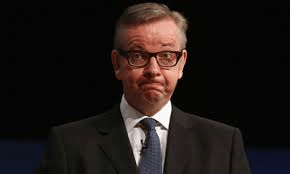
 As another difficult academic year draws to a close, it goes without saying that Michael Gove’s departure will be greeted euphorically by teachers and campaigners, particularly those who have focussed almost entirely on the ex-Secretary of State’s combative style, abrasive manner and other personal inadequacies.

 Education, Economy and Society
Reblogged this on Apprenticeship, Skills & Employability..