
Keir Starmer’s Labour will be campaigning on the economy this week. It will continue to remind us about how the Tories abysmal economic record has bankrupted the country, quickly pointing the finger at Liz Truss, but also Sunak and Hunt’s incompetence (though saying almost nothing about the damage done by Brexit). As a result Labour says, it will be saddled with Tory spending plans and guided by OBR’s projections.
By implication there’ll be limited increases in spending on public services and practically nothing new for education – after health, the second largest area of expenditure. In fact, with education failing to make the top 10 election issues in some opinion polls and with proposed savings in departmental budgets, it’s unclear if current spending levels will be maintained at all.
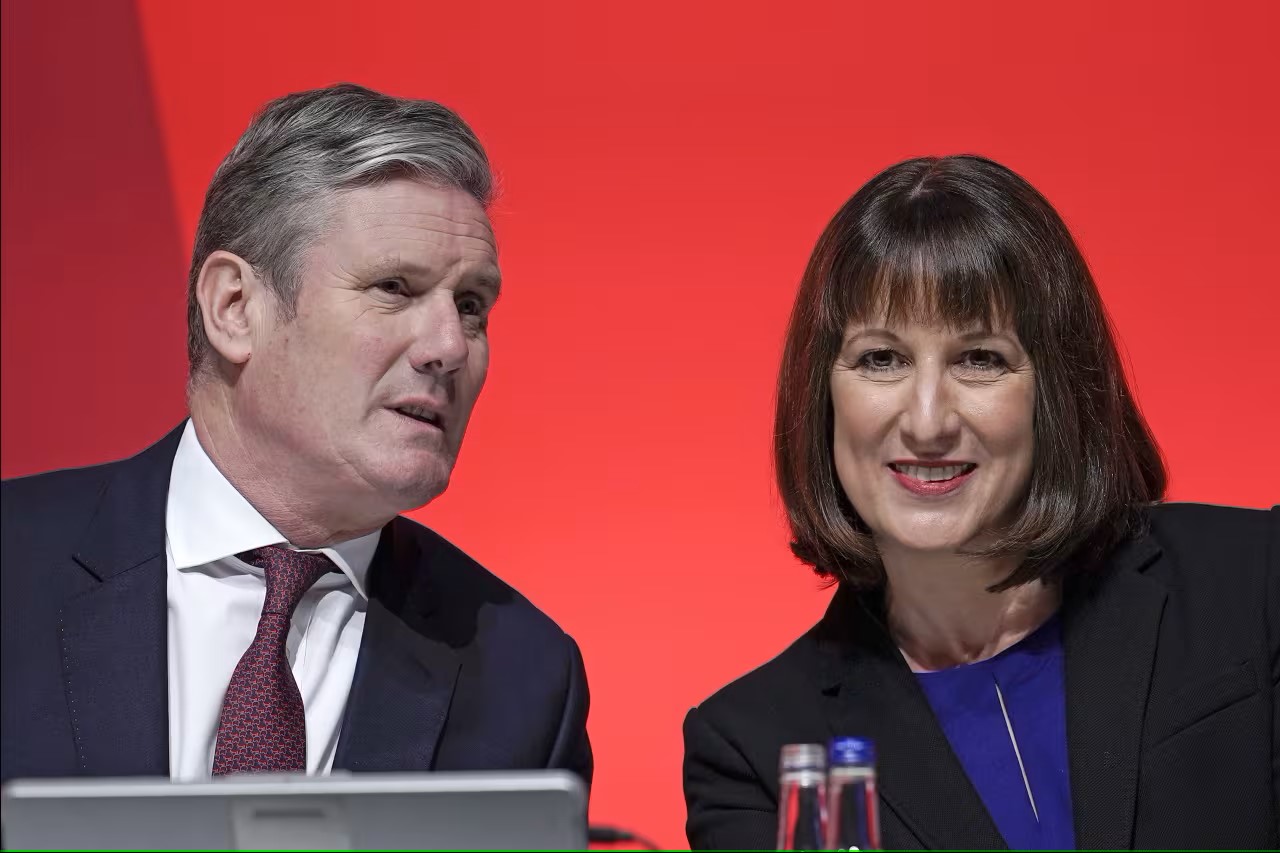
It’s also becoming increasingly apparent, that it’s Rachel Reeves (not Sir Keir) who’s setting the parameters of the policy agenda. Starmer’s Labour (in reality, Reeves’s Labour) justifies its lack of action by hiding behind self-imposed ‘fiscal rules’. This demonstrates the extent to which neo-liberal thinking (in the UK, Bank of England orthodoxy) continues to imprison the party, particularly the importance of ‘balancing the books’ and paying off government debt to keep interest costs low.
This is because in neo-liberal economics the economy must be run in the same way as a prudent household. Yet in the post-war years, Keynesian economics dominated the discipline and regarded this at best unhelpful, at worst just plain wrong. For much of this time public debt was much higher and economic growth much faster.
Reeves (who regularly refers to her previous employment at the BoE) and her front bench colleagues argue that unlike the Tories, their rules allow borrowing to invest. However, this is soon qualified, as another rule decrees that government borrowing as a proportion of GDP has to reduce over the life time of a parliament.
Yet there are other ways to finance increased expenditure. During the Covid-19 pandemic the Bank of England bought £450bn of debt created by the government. These bonds funded about the same amount of extra spending by the government. Around a third of total debt is still held by the government itself – one part of the state owes the other.
Put in this sort of language one might question the urgency of having to pay it back. However, in recent months the Bank of England has been trying to sell back this debt to private markets putting pressure on interest rates still further. Yet even if its own rules put Labour in shackles, it could still give itself more fiscal space by increasing taxes on the better off, which as is now also well known, it refuses to do.
Starmer’s promises of 6500 more teachers might make good headlines (but this barely equates as 1 for every 3 schools). Likewise, breakfast clubs in primary schools. Yet there are few costed items of education spending in the Manifesto and those that are listed are minuscule, compared to the education budget as a whole – being almost entirely financed by the £1.5 billion generated by imposing VAT on private schools.
That Labour thinks it can solve problems by ‘organisational’ measures rather than making financial commitments is clear in its approach to training and apprenticeships. In contrast to the Tories empty apprenticeship promises, it has laid out plans to reform the employer levy system which it considers too narrow.
Pointing to (up to £ 500 million) levy funds being returned / unclaimed, it proposes a new ‘growth and skills’ levy allowing employers to use 50 per cent of their funds for non-apprenticeship training. In other words, resources are being redirected rather than increased. But without extra funding or higher employer contributions this may reduce the small number of school /college leavers starting apprenticeships further.
Looking at adult skills training (those over 19 but outside of apprenticeships and higher education provision), where Mayoral Combined Authorities (MCAs) have been given some responsibility for spending their allocated budget, Labour wants further devolvement. But the real issue that total adult-skills spending in 2024-25 was 22 per cent below 2009-10 levels. Labour has made no commitments here.
Labour’s impasse on education is the result of its tunnel vision fiscal policy. The National Education Union rightly calls for a £12 billion spending increase during the first year of a Labour government simply to start reversing the impact of cuts to schools. But with one neo-liberal party set to take over from another, union leaders must also address and confront Reeves more general economic nonsense, if they are to carve out space in Labour’s post-election shopping list.

 Education, Economy and Society
And what happens when a university goes broke? The unis begin to eat each other and end up like FE!
The actual spending by the Department for Education for England will face a significant reduction in one area anyway.
This is due to the Tory decision to extend undergraduate student loan repayments from 30 to 40 years and to change the way interest is charged. This reduces significantly the number of graduates from England not expected to repay their fee/maintenance in full (and turns the student loan into a de facto graduate tax at 9% of income above the threshold).
London Economics estimated the Tory move would reduce non-repayment from 20+% to around 4% of loan value. IFT estimated £billions would be ‘saved’ from the reduced charge made to the DFE accounts for non-repayment, when they were calculating the viability of the recent Tory proposition to increase apprenticeship places by reducing student numbers on the lowest rewarding degrees (the so-called ‘Mickey Mouse degree’ elimination) – that policy is bonkers anyway because there is no way to identify low rewarding degrees (and in any case students from England could just go to Scotland/Cymru-Wales/N. Ireland to study the same subject), but the fiscal transfer calculations from IFS are real and significant.
Labour under Starmer is absolutely committed to maintaining the current student loan system for England, unlike in 2019. But that means in the first term of a Labour government that DFE total spending on student loans will reduce significantly.
The effect of that saving could well offset any Barnett consequentials for the devolved governments despite any increases in DFE spending due to the VAT on UK private school fees/primary breakfast clubs/6,500 extra teachers policies.
No-one is able to estimate how much the UK wide VAT policy will impact outside England, and how many children will be displaced from private to public sectors. I asked the IFS about this and they have not a clue – there is no country-specific data on which to make an estimate, the private school data is UK wide, therefore reflecting circa 82%-England. IFS have estimated likely switch but it takes no account of which country they fall. But it’s a reasonable proposition that it will vary from nation to nation – extreme wealth, where there is likely to be less resistance to a ‘price rise’ as a result of VAT@20%, is concentrated in London/South East England where the schools charging the highest fees are also located. So the IFS calculation on the numbers withdrawing from private education as a result of the price rise are unlikely to be concentrated in that location and as that makes up 20+% of UK population, will therefore cost the DFE less pro rata to provide more state school places in England.
But 20% of school pupils in Edinburgh are in private education as is the country’s only residential specialist music school with 75% of fees paid for by the Scottish Government. It could well cost the Scottish government more to deal with the fallout of the VAT policy than they receive in Barnett consequentials from DFE spending changes (which could well be negative anyway due to the student loan problem above).
All this indicates that neither Labour nor Tories have got their heads around the fiscal consequences and economics of devolution of education (including student loan policies) in a UK wide tax systems. VAT is UK wide, but in this instance Labour is in effect hypothecating UK taxes (including the de facto graduate tax aka student loan repayment) for England’s education system only and relying on Barnett based solely on overall population to sort it out fairly for devolved governments. But Barnett was never intended as more than a temporary measure to get the 1974-79 government through the IMF crisis and at a time when the Scottish Office, Welsh Office and Northern Ireland Office budgets needed adjustment as well as the then DES. Even Barnett himself called for its scrapping over a decade ago.
At least Plaid Cymru are rightly drawing attention to this in the current general election and demanding Barnett must be replaced with a needs based formula. Plaid are particularly highlighting the robbing of Cymru-Wales of over £4billion of consequentials due to the UK government’s assessment that HS2 expenditure benefits Wales just as much as England. But similar anomalies and issues apply to the financing of devolved education and the UK wide tax regimes. This ought to be a debate for education economics interests across the whole UK.
25 years ago, a new Labour government actually ran some seminars on Education Economics through the then DFEE department and ESRC – I remember going to some in the old Employment department building in Tothill Street Westminster (now DWP). There is a desperate need for some progressive new thinking on education economics and UK-wide fiscal policies in a devolved context given Labour’s absence of sound policies. Maybe this blog could consider developing them and encourage thinking about UK-wide education divergences and not just England?
Gre