
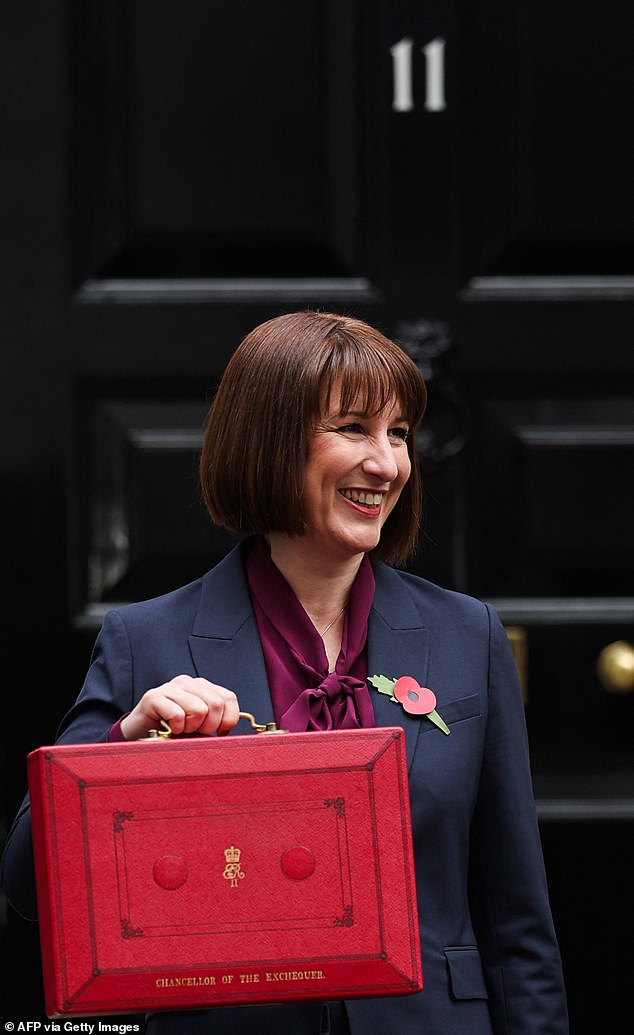
Make no mistake, there are some progressive intentions behind this week’s budget, as the Starmer government sets out to address the UK economy’s miserable performance since the financial crash, the rapid decline of public services and disintegrating infrastructure. Labour plans a £70 billion increase in public spending, with over £20 billion for the NHS, just to cover running costs.
Though increases in employer NI contributions and modest rises in capital gains have dominated headlines (and of course, the moves to limit private school financial privileges) leading to predictable attacks by right-wing media, the unnecessary penny pinching from the more vulnerable has meant the first budget of a new government has faced unparalleled hostility from across the social and political divide. But what is the wider economic context behind Labour’s first fiscal statement for 14 years?
As post- election and pre-budget press releases have sought to emphasise, the new administration is in a very different place, compared to when the last Labour government came to office. Arguably, all previous Labour governments have benefitted (and depended) from economic growth to expand social welfare and improve, or at least protect standards of living. In other words, they’ve wanted to be able to cut pieces from a bigger cake, rather than redistribute a smaller one.
This was certainly the case with the Blair/Brown administrations during the early years of the 21st century. Blair and Brown inherited an economy in ‘good shape’, boosted by leaving the European monetary system, but still remaining in the EU and where in addition to the trading opportunities they were able to source a plentiful supply of cheap Eastern European labour which reduced wage costs without pushing up unemployment. Keen supporters of an unregulated banking system, Blair and Brown also enjoyed additional taxation windfalls from a financial bubble that hadn’t yet burst.
Thus, with ‘education, education, education’, a major election pledge and a key New Labour project, money came pouring into the sector. Spending equated to 5.8% of GDP by 2009, university attendance by young people crept towards 50% and more controversially, 200 Academies were opened. Little of this would have happened in a less favourable economic climate.
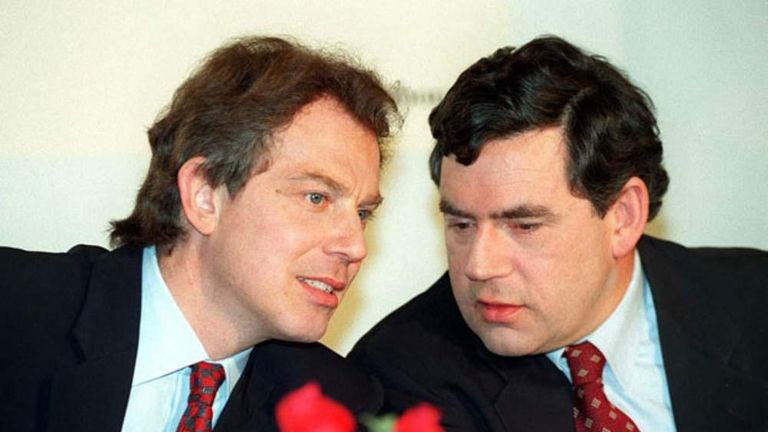
But Blair and Brown were able to do this by staying within the confines of neo-liberal economics, not challenging ‘trickle-down’ theories (Brown didn’t bring in the 50p income tax om incomes over £150,000 until after the crash) and keeping public debt ‘at a stable and prudent level’. Unlike Rachel Reeves, they were largely able to finance day to day expenditure from returns provided by economic prosperity – though, to stop the financial meltdown spreading across the rest of the economy, Brown quickly abandoned his self-imposed fiscal restrictions.
But despite Reeves relaxing restrictions on ‘borrowing to invest’ for which she earned IMF endorsement (the IMF is always more interested in the long term viability of UK capitalism than the Daily Mail and the bond market speculators ) Starmer and crew remain glued to (neo-liberal) economic orthodoxy, which decrees that books must be balanced, public debt must fall and where it’s ‘the markets’ rather than central banks that determine interest rates to ensure ‘fiscal responsibility’. So, the best we could ever expect was some ‘fine-tuning’.
A desperately needed wealth tax has never been on the agenda – though a group of some 30 MPs have pushed for one. Arguments that a government that issues its own currency does not have to be bound by (self-imposed) restrictions (fiscal rules) on how it could be spent, let alone filling ‘black holes’, have merited even less discussion, while policies for a green economy hardly get a look in.
Using some of the space created by freeing up investment borrowing, Labour plans to inject around £4 billion of new funding into the education service, including earmarking £1.4 billion over the parliament to restore crumbling schools. Yet it needs to be remembered that more than 100 schools, nurseries and colleges in England were forced to shut days before the autumn term last year following concerns over potentially unsafe reinforced concrete. So, like with the NHS, Reeves is faced with a monumental task.
The government has, at least for an initial period, upped the money for ‘day to day’ education spending, though a huge chunk has already been allocated to settling the teachers’ pay dispute. If incoming Education minister Bridget Phillipson has won plaudits for her high profiled enthusiasm and commitment to reducing inequality, she’s unlikely to be given the chance.
But Labour continues to hope that increased private sector investment will fill the gaps caused by its self-imposed limits on public expenditure. It may still confound OBR predictions that serious economic growth will have to wait till the next parliament and the Institute of Fiscal Studies doom laden predictions that taxes will have to rise. But a more likely scenario is that Labour will be desperate to keep the present situation from sliding further, so as to avoid major cuts and Austerity Mark 2.
With public support disintegrating, does the Reeves budget take things forward? Not really.

 Education, Economy and Society
Thanx for this analysis.
Do you have any comment on the additional 300 million for further education? It doesn’t seem much, but for once it is more than the increase universities got.
They’re making a big thing about Skills England, so it’s probably being linked to that. But I think FE/HE is low their list of priorities given their self-imposed financial constraints -their main task will be to prevent schools falling down.
I guess they’ll just let FE/HE muddle through, encourage mergers? They’re also running out of time to ‘pause’ the Tories BTEC plans
Thanks for this summary Martin. Despite some reasonab
Think the 1945 Labour Government set up the welfare state when the economy wasn’t booming?
Corbyn’s article is correct to describe it as an ‘austerity’ budget…
And by refusing to change the tax thresholds immediately Starmer is carrying on with the rich getting richer and the middle and the poor paying too much tax. Truly underhand neoliberalism.
Sent from my iPhone
>
That’s correct but there was plenty of capital being pushed into Europe by the US – part of the post war ‘reconstruction’. These actions were in response to the threat of Soviet style communism but also in the context of Keynes’s earlier ‘The economic consequences of the peace’ and of course the huge levels of expectations from the population for a ‘better life’ The Tories fell in behind much of this as well. After all the 1944 Education Act was designed by RAB Butler.
The Reeves budget is at best a ‘nothing budget’ To survive, Labour will need a huge dose of public spending – very unlikely. Or revert to Austerity Mark 2. More likely.